
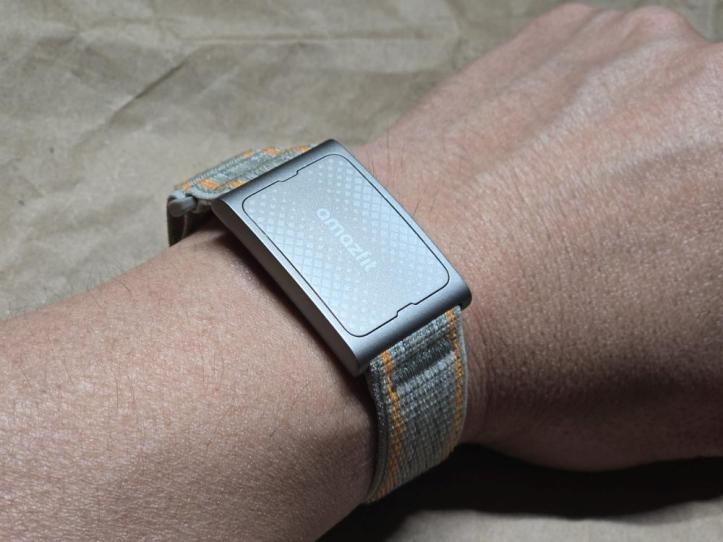
When you look at screenless fitness trackers, most follow a formula. You strap a pod to your wrist, it reads your pulse, gives you a recovery score, and asks for $15 a month to see your actual data. The Amazfit Helio Strap Pro skips the monthly fee entirely and takes a different hardware approach: a two-sensor setup designed to track movement from two different spots on your body.
The main unit sits on your arm or wrist to monitor heart rate, HRV, blood oxygen, skin temperature, and sleep. The second sensor clips directly to your waistband. While your arm unit measures heart strain, the waist clip tracks torso sway, cadence, and stability right from your center of gravity. That means it can look at actual mechanical effort during functional training, lunges, or sled pushes instead of just guessing based on arm swings. It integrates with the Zepp app and offers dedicated modes for HYROX racing. I wore the full kit for a week through light workouts, daily work, and sleep to see how the two-piece system functions in practice.
DESIGN
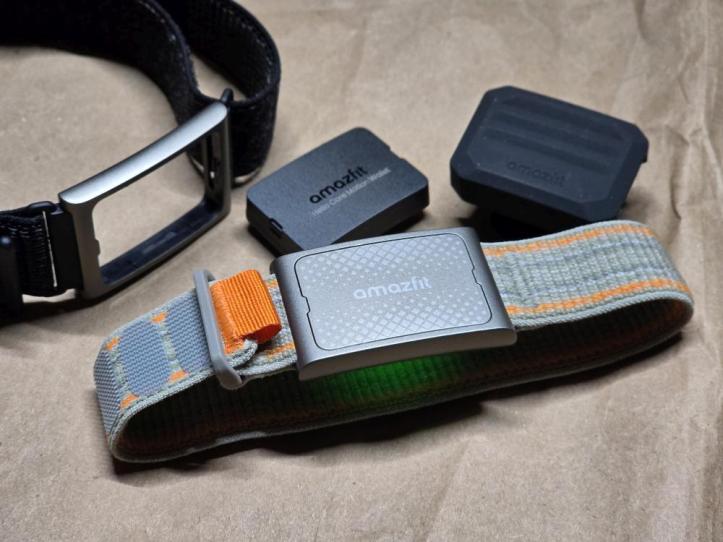
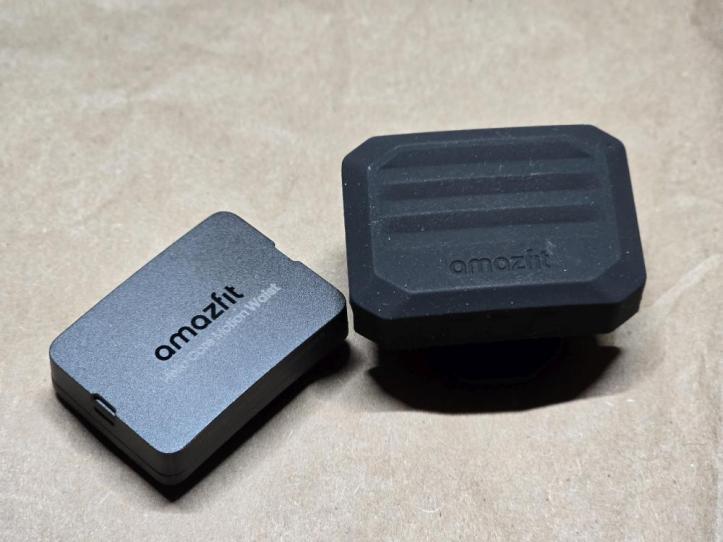
The box includes two distinct hardware pieces: the dark grey Core Motion HR unit and the black Core Motion Waist module. Both pods use smooth, buttonless plastic shells without screens or flashing status lights. They look minimalist and stay out of the way whether you are typing at a desk or sleeping.
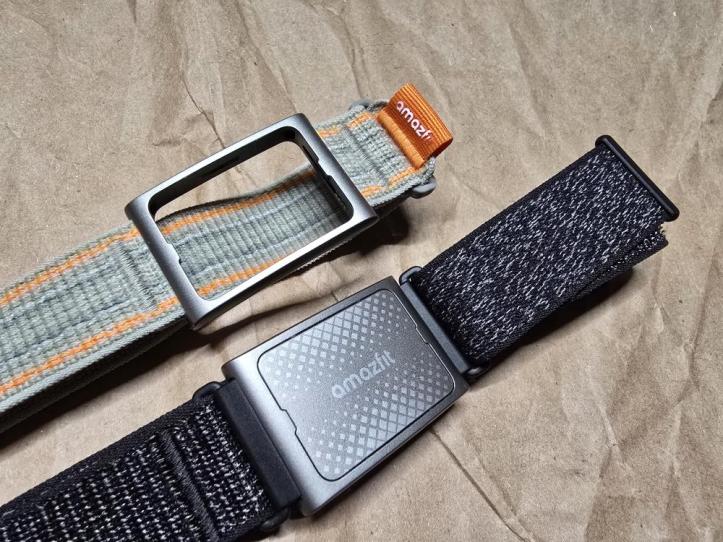
The Core Motion HR snaps into a 22 mm stretch-nylon wrist strap. Out of the box, the light fabric with orange accents looks good, though long-term sweat resistance will take a few months to prove out. Amazfit also includes a plain black bicep band. It lacks the visual flair of the wrist strap, but the extra elasticity keeps it comfortable if you prefer wearing the sensor on your upper arm.
At 11 grams, you barely feel the main pod. The hook-and-loop velcro makes quick adjustments easy, holding the optical sensors flush against your skin without pinching. Taking it off before taking a shower kept the fabric clean and dry during the week.
The black waist clip uses a dense silicone grip that slides over athletic shorts or leggings. Positioned over your hip or beltline, it stays anchored and does not twist around during normal walking or light movement.
For sleep tracking, missing a screen is an advantage. Big smartwatches often wake you up with accidental display light or side buttons digging into your wrist. The Core Motion HR rests flat, stays quiet at night, and does not leave deep indentations on your arm by morning.
EXPERIENCE
I wore both pods daily during light workouts, desk work, and sleep tracking.
For baseline health stats, the Core Motion HR performed reliably. The BioTracker 6.0 sensor tracked heart rate shifts smoothly during walk breaks and steady cardio. For the days where I didn’t feel like wearing it on my wrist, I’d switch to the arm band, which measured stats just as accurately.
Clipping on the waist sensor changes how workout tracking feels. While the wrist unit logs cardio load, the waist clip focuses on body mechanics. During core work, bodyweight circuits, and light runs, its 9-axis sensor measures cadence and torso stability. Standard wrist trackers frequently count simple arm movements as steps or exercise reps; tracking from your waist avoids that issue.
Sleep monitoring is where the lightweight design works best. The HR unit tracks sleep stages, overnight HRV, skin temperature, and resting heart rate without getting in the way when you flip over. The readiness scores in the Zepp app felt consistent from morning to morning, matching how rested I actually felt.
Battery life is another benefit of skipping a display. Amazfit claims up to 11 days for the HR module and 44 days for the waist clip. In continuous daily wear with nightly sleep tracking, the HR pod lasted 9 to 10 days on a charge. The waist sensor barely lost any charge over seven days. Recharging both takes under two hours on the magnetic dock.
ZEPP APP
Data from both pods syncs into the free Zepp app. The health tab lays out core vitals—continuous heart rate, blood oxygen, skin temperature trends, breathing quality, and sleep stages—to calculate an overall Readiness Score each morning.
For exercise, the app breaks down cardio load, heart rate zones, aerobic/anaerobic Training Effect, and VO2 max. When the waist sensor is active, it opens up extra metrics like cadence, torso sway, body stability, and muscular load so you can check if your form breaks down during longer sets. Currently, these deeper kinetic metrics are tailored specifically to HYROX training modes.
FINAL THOUGHTS
At $199.99, the Amazfit Helio Strap Pro offers a practical alternative to standard screenless trackers. Splitting tracking duties between a dark grey wrist sensor and a black waist clip lets it collect kinetic movement data that single-pod wearables miss. The nylon wrist strap looks sharp for everyday wear, and 9 to 10 days of real-world battery life keeps charging routines simple.
The main draw is straightforward: you get full access to your sleep analysis, HRV, recovery scores, and movement metrics without paying a monthly subscription. The lighter wrist band might show dirt over time, and the bicep band looks pretty basic, but those are minor compromises. If you want a non-intrusive tracker that delivers deep biometric and form data without a recurring bill, the Helio Strap Pro is a solid option.

